

Steel & Alloy Price Trends in India: What’s Driving Costs in 2026

erametssteel.
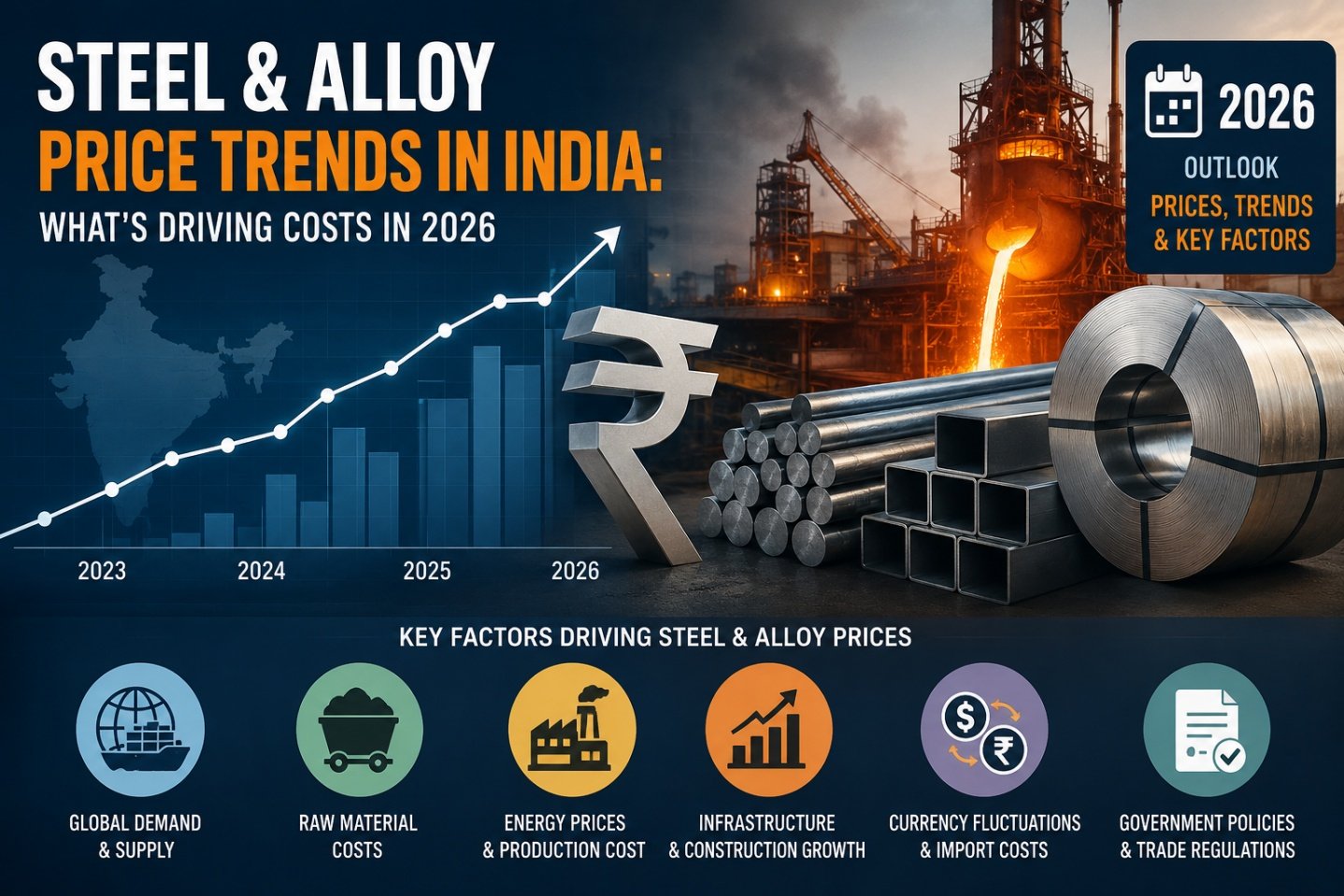
If you’ve priced out a steel or alloy order recently and found the numbers shifting from what you expected, you’re not imagining things. 2026 has turned out to be a year of firm, sometimes unpredictable pricing across steel and specialty alloys in India. For procurement teams, engineers, and project managers, understanding why is just as important as knowing the current rate.
At Eramets Steel Alloys, we track these movements closely because our customers in oil & gas, pharmaceuticals, chemicals, and process manufacturing depend on us for accurate pricing and reliable supply. Here’s a breakdown of what’s actually driving costs this year.
1. Raw Material Costs Remain the Biggest Lever
Steel and nickel-based alloys are only as cheap as the raw materials that go into them. Iron ore, coking coal, nickel, and scrap metal prices have stayed elevated through much of 2026, and these feed directly into the cost of everything from carbon steel pipe to high-performance alloys like Inconel and Hastelloy.
Nickel in particular has been a key cost driver for specialty alloys, given its role in corrosion- and heat-resistant grades used across chemical and oil & gas applications.
When global commodity prices move, domestic mills pass that through fairly quickly, so even buyers sourcing entirely within India feel the ripple effects of international raw material markets.
2. Infrastructure Spending Is Keeping Demand and Prices Firm
India’s continued push on infrastructure is a major factor. With large-scale government allocations toward highways, railways, metro systems, and urban development, demand for structural and industrial steel has stayed strong through the year.
This sustained demand gives mills less incentive to discount, which keeps prices firm even when raw material costs occasionally ease.
For buyers, this means the usual assumption “demand is slowing, so prices should fall” hasn’t really played out in 2026. Strong government and private infrastructure activity has offset the kind of softness that would normally bring prices down.
3. Global Shipping and Geopolitical Disruptions
Freight and logistics costs have added another layer of pressure this year. Disruptions to key global shipping routes, along with general volatility in international trade, have pushed up landed costs for imported raw materials and finished products alike.
Even domestically produced steel isn’t fully insulated, since inputs like coking coal are often imported.
This has meant more caution across the supply chain, with buyers ordering closer to need rather than stockpiling, and suppliers adjusting quotes more frequently to reflect real-time input costs.
4. Safeguard Duties and Trade Policy
Government measures aimed at protecting domestic manufacturers, including duties on certain imported steel products, have provided price support for Indian-made flat steel and other categories.
While these measures are designed to protect local industry from cheap imports, they also mean domestic buyers see less downward price pressure than they might in a fully open market.
5. Specialty Alloys Are Behaving Differently from Commodity Steel
Here’s an important distinction for anyone buying nickel alloys, titanium, or duplex steel rather than standard structural steel: specialty and processed materials have generally held their pricing more firmly than commodity-grade products.
While base steel categories like hot-rolled coil or rebar have seen some short-term softening when inventories build up, high-performance alloys used in critical applications such as chemical processing, pharmaceuticals, and oil & gas tend to hold value because their raw material inputs, especially nickel, and processing costs don’t fluctuate the same way.
If your projects rely on Inconel, Monel, Hastelloy, or duplex/super duplex steel, it’s worth budgeting with the expectation that these grades will stay comparatively stable rather than dropping in line with general steel market corrections.
6. What This Means for Buyers Going Forward
Rather than waiting for a dramatic price drop, the smarter approach for most buyers in 2026 is:
• Track trends, not headlines. Short-term dips happen, but the overall cost floor has moved up due to structural factors like raw material costs and infrastructure demand.
• Lock in supply relationships. Working with an established stockist means faster access to material without repeatedly re-negotiating against a moving market.
• Plan procurement around project timelines, not price speculation. Given that a major downside correction looks unlikely, timing purchases around your actual project needs is generally more effective than trying to “wait out” the market.
Why Work With a Trusted Stockist Like Eramets
As an ISO 9001:2008 certified manufacturer, supplier, and stockist based in Mumbai, Eramets Steel Alloys maintains ready inventory across nickel alloys, stainless steel, titanium, Hastelloy, Monel, Inconel, and duplex/super duplex steel.
That means our customers get consistent quality, competitive pricing, and reliable delivery even as the broader market shifts.
Frequently Asked Questions
1. Will steel prices in India fall in the second half of 2026?
Most market indicators point to prices staying range-bound rather than dropping sharply. Structural cost pressures, particularly elevated raw material and freight costs, are expected to keep a firm floor under prices, even if short-term corrections occur in specific product categories.
2. Why are specialty alloys like Inconel and Hastelloy more expensive than regular steel?
These alloys rely heavily on nickel and other high-cost elements to achieve their corrosion and heat resistance, and they require more complex processing. Because nickel prices have stayed elevated, these grades have generally held their value more consistently than commodity steel products.
3. How can I protect my project budget from steel price volatility?
Locking in supply agreements with an established stockist, ordering based on project timelines rather than trying to time the market, and staying in regular contact with your supplier for updated pricing are the most effective ways to manage volatility.
4. Does Eramets Steel Alloys offer current pricing on nickel alloys and stainless steel?
Yes. Eramets maintains ready stock of nickel alloys, stainless steel, titanium, and specialty alloys, and can provide up-to-date pricing based on grade, quantity, and specification. Reach out via our contact page for a quote tailored to your requirements.