

A Complete Buyer’s Guide to Nickel Alloy Pipes & Tubes for Industrial Use

erametssteel.
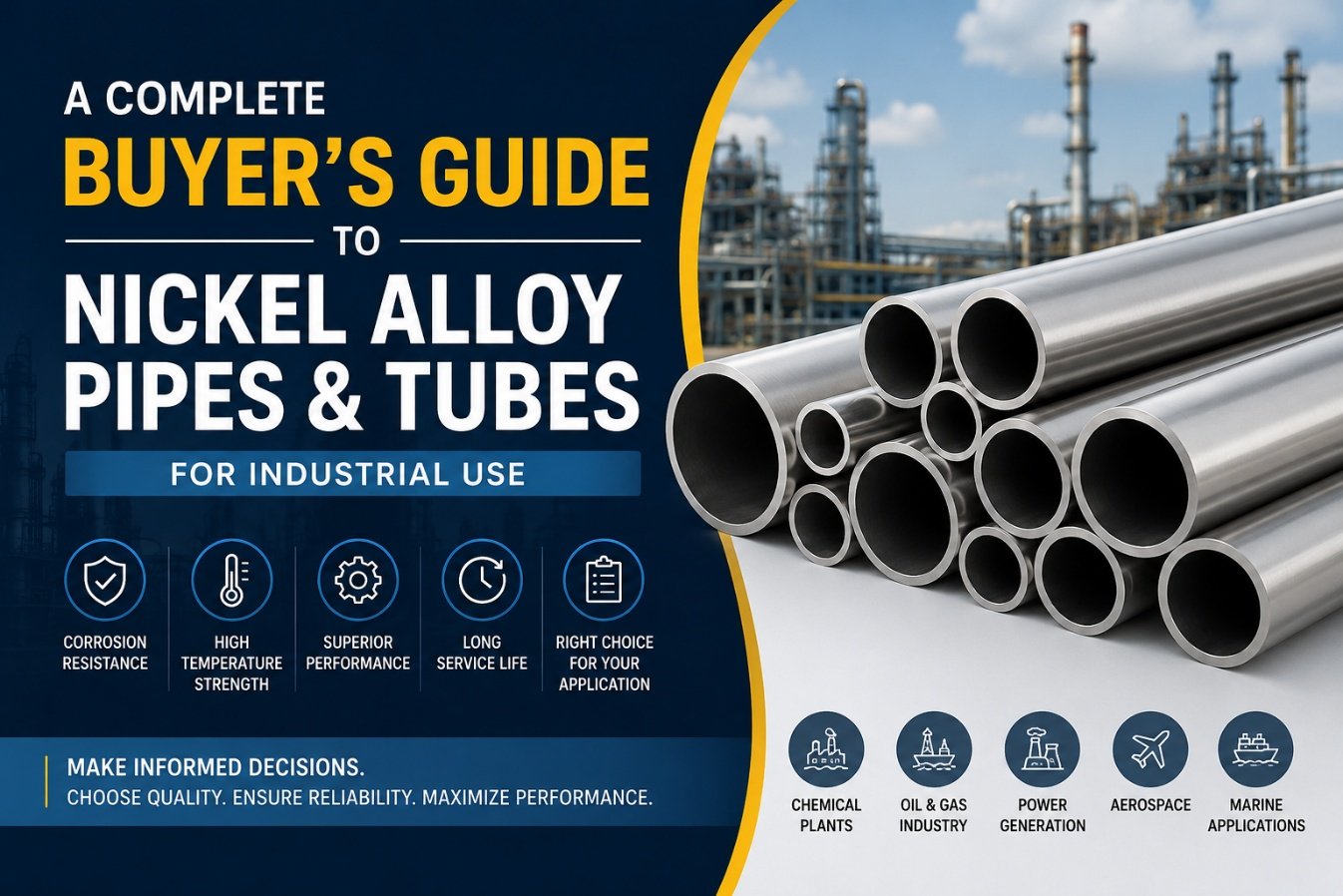
Choosing the right nickel alloy pipe or tube isn’t just a procurement decision — it’s an engineering one. Get it wrong, and you’re looking at premature corrosion, unplanned shutdowns, or costly rework. Get it right, and you have material that will perform reliably for decades in some of the harshest environments industry has to offer.
This guide breaks down what you actually need to know before placing an order, so you can specify the right grade, avoid common buying mistakes, and work confidently with your supplier.
Why Nickel Alloys Instead of Standard Steel?
Nickel alloys are used precisely where standard carbon or stainless steel falls short. Nickel improves resistance to corrosion, oxidation, and extreme temperatures, which is why these materials show up in the most demanding parts of a plant — reactors, heat exchangers, sour gas service, and high-temperature process lines.
Compared to standard stainless steel, nickel alloys typically offer:
• Better resistance to pitting and crevice corrosion in chloride-rich environments
• Higher strength retention at elevated temperatures
• Superior resistance to stress corrosion cracking
• Longer service life in aggressive chemical or marine conditions
The trade-off is cost: nickel alloys are significantly more expensive than carbon or standard stainless steel. That’s exactly why getting the specification right the first time matters so much.
Common Nickel Alloy Grades and Where They’re Used
Inconel (600, 625, 718)
Known for excellent high-temperature strength and oxidation resistance. Widely used in aerospace, gas turbines, and high-temperature chemical processing where both heat and corrosion resistance are needed simultaneously.
Monel (400)
A nickel-copper alloy prized for resistance to seawater and hydrofluoric acid. Common in marine engineering, offshore oil & gas, and chemical processing involving hydrofluoric acid.
Hastelloy (C-276, C-22)
Built for extreme corrosion resistance, particularly in oxidizing and reducing acid environments. A go-to choice for chemical processing, pollution control equipment, and pharmaceutical manufacturing where process chemistry is unpredictable or highly aggressive.
Nickel 200/201
Nearly pure nickel, valued for resistance to caustic soda and other alkaline environments, along with excellent thermal and electrical conductivity.
Key Factors to Evaluate Before You Buy
1. Process Chemistry
The exact chemicals, concentrations, and temperatures your piping will handle should drive grade selection. A material that performs well in sulfuric acid may fail quickly in hydrochloric acid.
Always match the alloy to your specific process conditions, not just general “corrosion resistance.”
2. Operating Temperature
High-temperature service demands alloys engineered for strength retention and oxidation resistance at elevated temperatures. Inconel grades are typically the first consideration here.
For lower-temperature but highly corrosive environments, Hastelloy or Monel may be a better fit.
3. Pipe vs. Tube Specification
Pipes are generally specified by nominal size and schedule (wall thickness), while tubes are specified by actual outer diameter and wall thickness.
Tubes are often used in heat exchangers and instrumentation where precise dimensional tolerance matters; pipes are more common in general process piping.
Confirm which your application actually requires — the two aren’t interchangeable.
4. Standards and Certification
Make sure the material meets the relevant ASTM/ASME specifications for your industry, such as ASTM B622, B619, or B729 for nickel alloy pipe and tube.
Request mill test certificates (MTCs) confirming chemical composition and mechanical properties. This isn’t optional for critical service — it’s your traceability record if something goes wrong later.
5. Seamless vs. Welded
Seamless nickel alloy pipe is generally preferred for high-pressure or critical service due to the absence of a weld seam, which can be a point of weakness.
Welded pipe can be a more economical option for lower-pressure or less critical applications, provided it meets the required standards.
6. Supplier Reliability
Nickel alloys are a significant investment, and lead times can be long if a supplier doesn’t stock the grade and size you need.
Working with a stockist who maintains ready inventory reduces project delays and gives you flexibility if specifications change mid-project.
Common Buying Mistakes to Avoid
• Over-specifying “the strongest alloy” without matching it to actual process conditions — this drives up cost unnecessarily.
• Skipping mill certification requests — always verify chemical composition and mechanical test results before installation, especially for pressure-critical applications.
• Ignoring dimensional tolerances — especially for tube used in heat exchangers, where fit and wall thickness consistency directly affect performance.
• Choosing on price alone — the cheapest quote sometimes reflects lower testing standards or non-traceable material, which can cost far more in downtime later.
Industries That Rely on Nickel Alloy Pipes & Tubes
Nickel alloy pipe and tube show up across chemical processing, oil & gas (particularly sour service and offshore), pharmaceuticals, power generation, marine engineering, and pollution control systems — essentially anywhere corrosion resistance and high-temperature performance are non-negotiable.
Sourcing from a Trusted Nickel Alloy Supplier
At Eramets Steel Alloys, we stock a wide range of nickel alloy pipes and tubes including Inconel, Monel, and Hastelloy backed by proper certification and consistent quality.
As an ISO 9001:2008 certified supplier and stockist based in Mumbai, we work with clients across chemical, oil & gas, pharmaceutical, and process industries to make sure the material you receive matches the application it’s going into.
Frequently Asked Questions
1. What’s the difference between nickel alloy pipe and nickel alloy tube?
Pipe is specified by nominal size and schedule (a standardized wall thickness classification), typically used for general process piping.
Tube is specified by exact outer diameter and wall thickness, offering tighter dimensional tolerances, and is commonly used in heat exchangers and instrumentation where precision fit matters.
2. How do I choose between Inconel, Monel, and Hastelloy?
The choice depends on your specific process conditions.
Inconel is best suited for high-temperature environments with oxidation resistance needs.
Monel performs well in seawater and hydrofluoric acid service.
Hastelloy is generally the top choice for aggressive, unpredictable chemical environments involving both oxidizing and reducing acids.
3. Why are nickel alloys so much more expensive than stainless steel?
Nickel is a costly raw material, and these alloys require specialized processing to achieve their corrosion and heat resistance properties.
The higher upfront cost is generally offset by significantly longer service life and reduced maintenance in harsh operating conditions compared to standard steel.
4. Should I always request mill test certificates when buying nickel alloy pipe?
Yes, especially for pressure-critical or regulated applications.
Mill test certificates confirm the chemical composition and mechanical properties of the material, giving you traceability and assurance that it meets the required specification.
This is standard practice for industries like oil & gas, chemical processing, and pharmaceuticals.