

Why ISO 9001:2008 Certification Matters When Choosing a Steel Supplier

erametssteel.
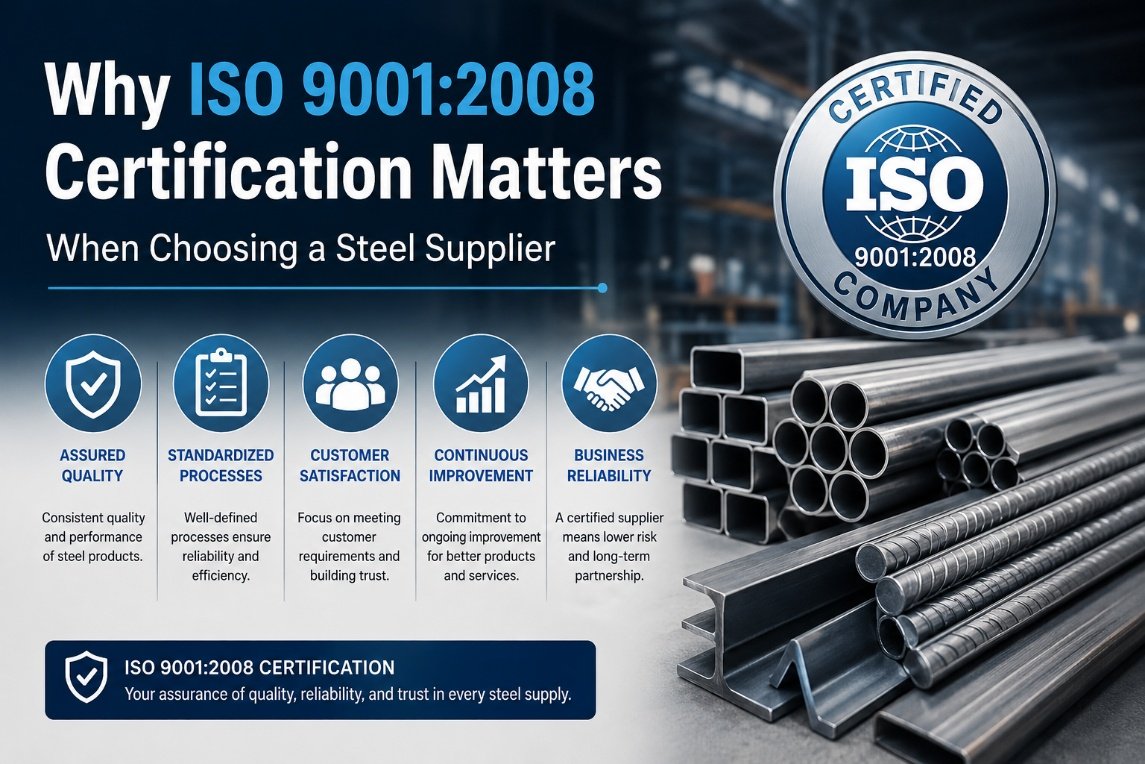
When you’re sourcing steel, stainless steel, or specialty alloys for an industrial project, the price per kilo or the delivery timeline is often the first thing that gets discussed. But before either of those should even come into play, there’s a more fundamental question every buyer needs to ask: can this supplier consistently deliver the quality my project depends on?
This is exactly where ISO 9001:2008 certification comes in. It isn’t just a certificate framed on an office wall and it’s a globally recognized signal that a supplier has a structured, repeatable, and audited system for maintaining quality at every stage of production and supply. For industries like chemical processing, oil & gas, pharmaceuticals, and food & beverage where material failure isn’t just costly but potentially dangerous, this certification is far more than a formality.
What ISO 9001:2008 Actually Means
ISO 9001 is an international standard that defines the requirements for a Quality Management System (QMS). The 2008 revision focuses on ensuring organizations consistently provide products that meet customer and regulatory requirements, while continually improving their processes.
For a steel or alloy supplier, certification means independent auditors have verified that the company has documented, standardized procedures covering everything from raw material sourcing and testing, to manufacturing, storage, and final dispatch. It’s not a one-time badge certified companies are subject to periodic surveillance audits to ensure they maintain these standards over time.
Why It Matters When Choosing a Supplier
1. Consistent Material Quality
Steel and alloy products like Inconel, Hastelloy, Monel, and stainless steel grades (304, 316, 316L, 321, and others) must meet exact chemical composition and mechanical property specifications. An ISO 9001:2008-certified supplier follows standardized testing and inspection protocols at every stage, which drastically reduces the risk of receiving substandard or mismatched material something that can compromise an entire project if discovered too late.
2. Traceability and Documentation
In regulated industries like pharmaceuticals and oil & gas, you often need full material traceability mill test certificates, batch numbers, and compliance documentation. Certified suppliers maintain rigorous record-keeping practices as part of their QMS, so you’re not left scrambling for paperwork during an audit or inspection.
3. Reduced Risk of Supply Chain Disruption
A certified quality system means a supplier has defined processes for handling non-conformities, corrective actions, and continuous improvement. In practice, this translates to fewer errors, fewer returns, and fewer last-minute surprises which matters enormously when you’re working against tight project timelines.
4. Confidence in International Trade
For companies exporting or importing steel and alloy products, ISO 9001:2008 certification is often a baseline expectation from international buyers and regulatory bodies. It signals that the supplier’s processes align with globally accepted quality benchmarks, making cross-border transactions smoother and more trustworthy.
5. Accountability Built Into the System
Certification isn’t self-declared when it comes from third-party audits. This external validation means the supplier is accountable not just to their customers, but to an independent certifying body that periodically reviews their processes. That’s a level of oversight you simply don’t get from an uncertified vendor.
What to Look for Beyond the Certificate
While ISO 9001:2008 certification is an important checkpoint, it should be paired with a few other due-diligence steps when selecting a steel supplier:
- Ask for mill test certificates (MTCs) on any batch you purchase, to confirm chemical and mechanical properties.
- Check their product range and stocking capacity — a supplier with deep inventory across grades (stainless steel, duplex, super duplex, nickel alloys) can better handle urgent or bulk requirements.
- Verify industry-specific experience — a supplier serving chemical, pharmaceutical, or oil & gas clients will understand sector-specific compliance needs better than a generalist vendor.
- Confirm authorized dealership status if you need branded material, such as Jindal Stainless Steel products, to ensure authenticity.
The Bottom Line
Choosing a steel supplier is ultimately a risk-management decision. A single batch of non-compliant material can lead to project delays, equipment failure, regulatory issues, or safety incidents. ISO 9001:2008 certification doesn’t eliminate all risk, but it significantly narrows the gap between “hoping” a supplier delivers consistent quality and having documented, audited proof that they do.
When quality, traceability, and reliability are non-negotiable as they are in chemical, oil & gas, pharmaceutical, and heavy engineering industries partnering with an ISO 9001:2008-certified supplier isn’t just a best practice. It’s the foundation of a dependable, long-term supply relationship.
Frequently Asked Questions
Q1. Is ISO 9001:2008 still a valid certification, or has it been replaced?
ISO 9001:2008 was superseded by ISO 9001:2015, which introduced a stronger emphasis on risk-based thinking and leadership involvement. Some suppliers may still reference the 2008 standard based on historical certification, but reputable, actively certified companies typically maintain the most current version to stay compliant with global quality benchmarks.
Q2. Does ISO 9001 certification guarantee the quality of every single product batch?
Not directly. ISO 9001 certifies that a company’s quality management process is sound and consistently followed it doesn’t test or certify individual batches. That’s why it’s still important to request mill test certificates and inspection reports for the specific material you’re purchasing.
Q3. How can I verify if a supplier’s ISO 9001 certification is genuine?
You can ask the supplier for their certification number and issuing body, then cross-check it directly with the certifying organization’s database or website. Reputable certification bodies maintain public records of certified companies.
Q4. Does ISO 9001 certification affect pricing?
Certified suppliers may have slightly higher operational costs due to audits, testing, and documentation processes, but this is typically offset by fewer defects, returns, and project delays making certified suppliers more cost-effective in the long run, especially for critical applications.